Tag Archives: Kilimanjaro

14. Don’t forget the Everyday Heroes

To complete my Kilimanjaro story . . .

Having climbed through the night to reachUhuru Peak, the very top of Kilimanjaro, we still had another long day ahead of us. Rather than lots of celebration, a good sit down, perhaps a cooked breakfast and a glass of bubbly, it was a case of Chop-chop rather thanPolepole. For our own wellbeing our guides were keen to get us moving back down to an altitude more suited to human lif

e.

After returning across the rim to Stella Point, the descent was not as hard as the ascent, but it
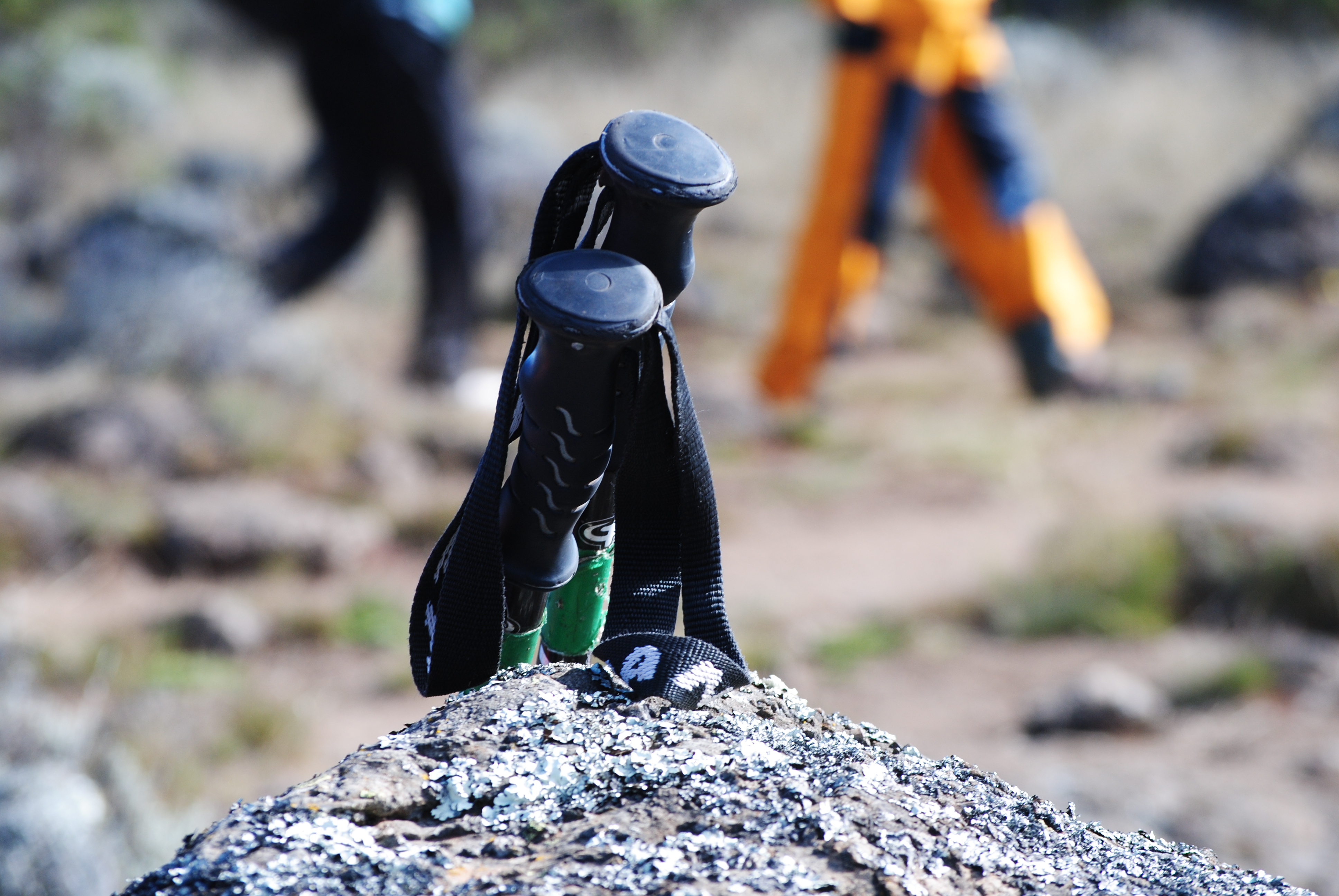
Walking poles

Walking poles

was not easy. We travelled over loose scree. Each step down was accompanied with a slight slip. In some cases a long slip and on occasions a stumble and a tumble. This is where our walking poles really came in to their own. After about an hour and a half we made it on to firmer ground, but it was still a long walk back to the camp. I was very glad to see the porter who had been assigned to me throughout the week. He had walked some 20 minutes or so up the mountainside to greet me and relieve me of my back pack. Down to the camp. And at last a rest.

Rainbow over Shira 1 campsite

Rainbow over Shira 1 campsite

However, this was not the end of the day. After about an hour or so we were called to have some food. We were glad to find the three members of our party who had not made it to the top were all well and in good spirits. Although we had all come to climb the mountain, as Florence our guide had said, the main priority was that we all got down safe and well. Another short rest and then back on the trail, heading down to the next camp on the Mweka Route. It was another long walk, but mainly downhill and we quickly recovered from the earlier effects of high altitude. We began to feel normal again – although exhausted!

That night was one of celebration, but also of some sadness. Two of the party, Bjorn and Katrine, would be leaving very early the next morning to continue their holiday. So, just like in the Lord of the Rings, this was to be the breaking of our Fellowship. The Kilimanjaro 15 was to become the Kilimanjaro 13. We toasted our success; we commiserated those not fortunate enough to make it to the very top and we mourned the fact that this would be our last meal together. (Okay, so perhaps it wasn’t quite as dramatic as Boromir being shot by the Orcs of Orthanc, Pippin and Merry being captured and Frodo and Sam slipping off to Mordor, but you know what I mean!)
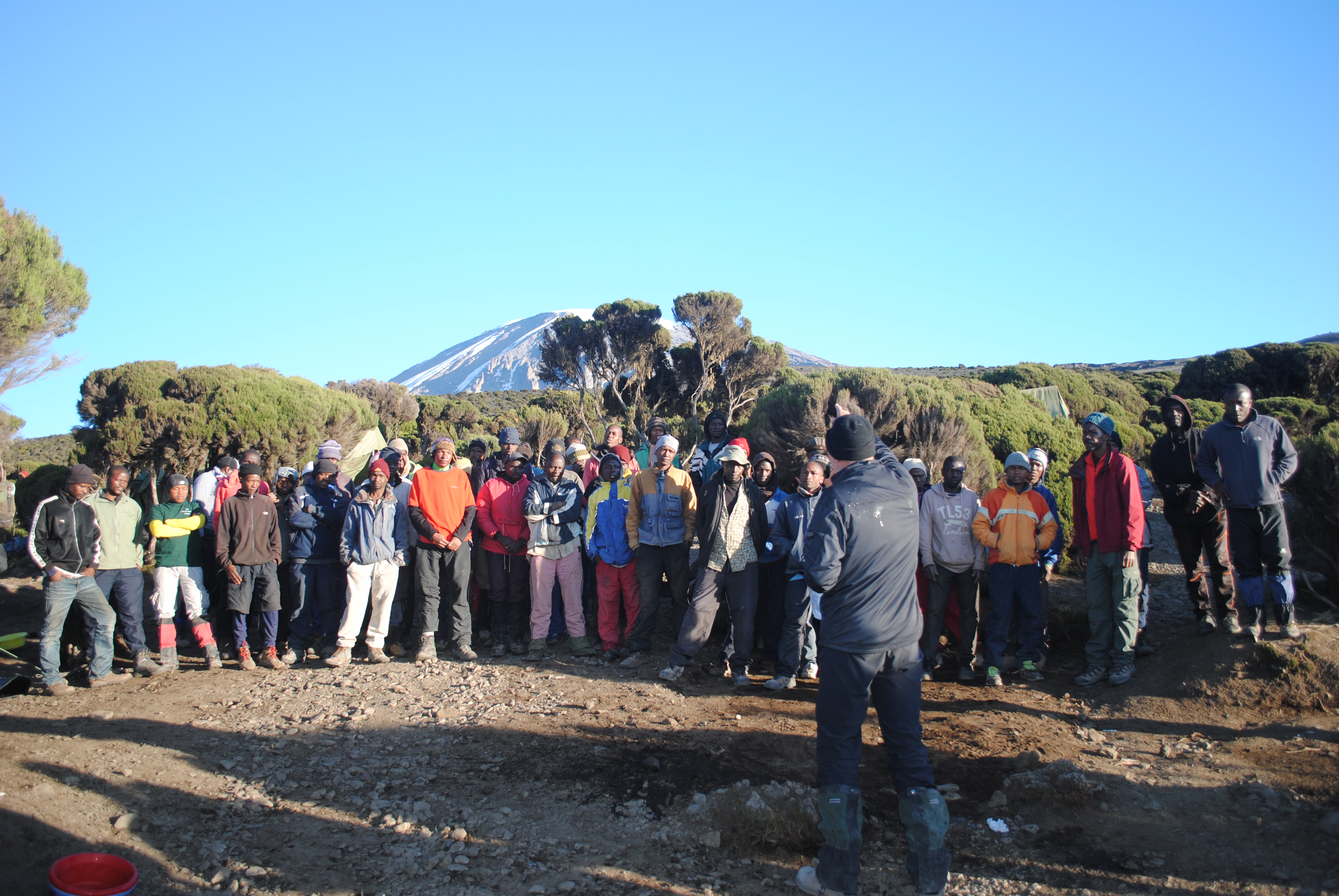
The guides, porters and 'stomach engineers', giving us a final song

The guides, porters and ‘stomach engineers’, giving us a final song

The final day dawned, and another long morning walk. This time down a path with semi-natural steps every 5 metres or so. In theory easy. In practice, hard on the legs, which struggled to adjust to the constant descent after 7 days of walking mainly uphill. A final delay in checking out of the Kilimanjaro National Park; a celebratory first cold drink of alcohol (for some) and a bus journey off the mountainside. The main part of our journey was complete.

Final reflections

Throughout this blog, which I started some months before the climb, I have drawn out lessons learnt along the way. Maybe not spectacular or stuff that wouldn’t have occurred to me (or you) if thought about, but put into sharper context by the scale of the challenge.

If you have followed the blog from the start, you may recall the Lessons:

1. Inspiration and Action (lack of)

2. Back on track. Public Commitment

3. Gaining momentum – gathering a team

4. The power of a challenging goal

5. Fail to prepare, then . . .

6. Camping – don’t do it

7. Altitude Sickness – be as prepared as you can be

8. Be firm on the goal, be flexible as to methods (or Charity begins at home, but it ends in Kenya)

9. Impressions of Tanzania – there is always a different way of doing things

10. What are your crater walls?

11. A journey of 5,895m starts with the first step

12. No Guts, No Glory (but try to hang on to your guts)

13. Getting to the top is always that much easier if you have the support of others

And to complete the list:

14. Don’t forget the Everyday Heroes

In the course of my journey I have managed to raise in excess of £3,000 for the three charities I wanted to support (http://uk.virginmoneygiving.com/TonyBarradell). And this has meant as much to me as making it to the top of the mountain. And I very much appreciate all of the donations that so many people have made in recognition of my effort in climbing Kilimanjaro.

But this is my final reflection. I chose to go on this trip. I was fortunate in having the financial means to do so; the flexibility in my work and the support of my family to be able to take the time away. Plus lots of other support along the way. Some people – actually most people – would not have been so lucky. I had a great time, and any hardships I suffered (see Lesson 6 above) were 1) temporary and 2) self-inflicted. In contrast, so many people suffer hardship that is 1) long-term or even permanent and 2) certainly not self-inflicted. I only have to look around me to see:

  • People suffering from physical and mental illnesses, but who struggle on
  • People struggling against the effects of injury (mental and physical) that have been inflicted upon them
  • People struggling to make ends meet, with little money
  • People struggling to care for those they love, who are perhaps in the categories above.

The youngsters in the Footprints orphanage in Kenya, one of my charities, live a hard life. But it is not all sweetness and light for many people in the UK and other developed countries. People are battling on every day. People not fortunate enough to climb Kilimanjaro and reach ‘the roof of Africa’, even if they wanted to.

Whilst my blog may be aimed at those striving for success, let’s hear it for the everyday heroes. Those people who struggle on, against adversity, day after day. They are the real heroes, not the ones who can go for a long walk in a high place once in a while. So, on your way to the top, Lesson 14 – Don’t forget the Everyday Heroes.

Thank you for following Kilimanjaro – there and back again.

Tony and Jonathan

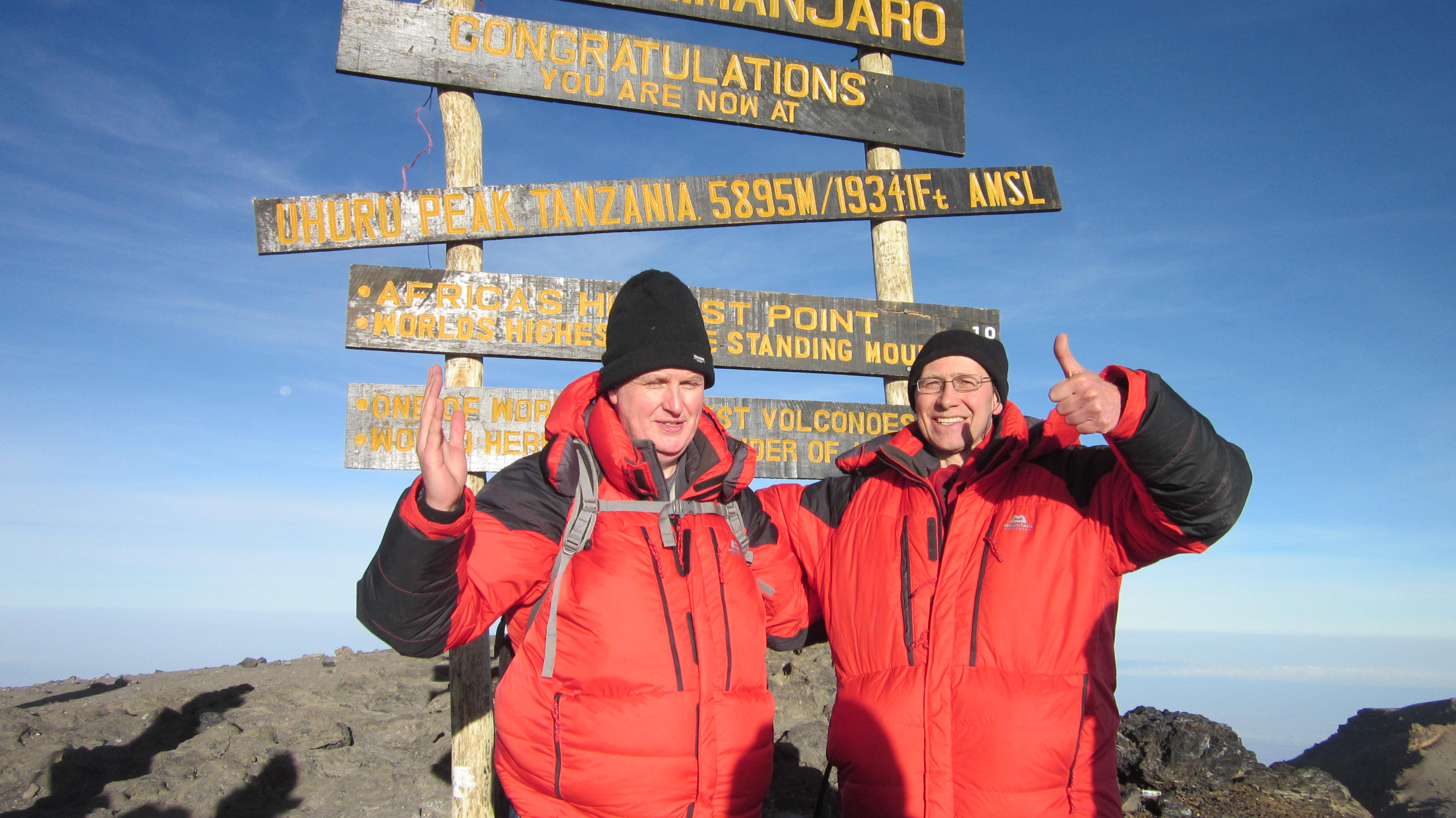
Tony and Jonathan

13 Getting to the top is always that much easier if you have the support of others

It was a slog. It was probably the hardest slog of my life. But it was what we had come to Kilimanjaro to do.

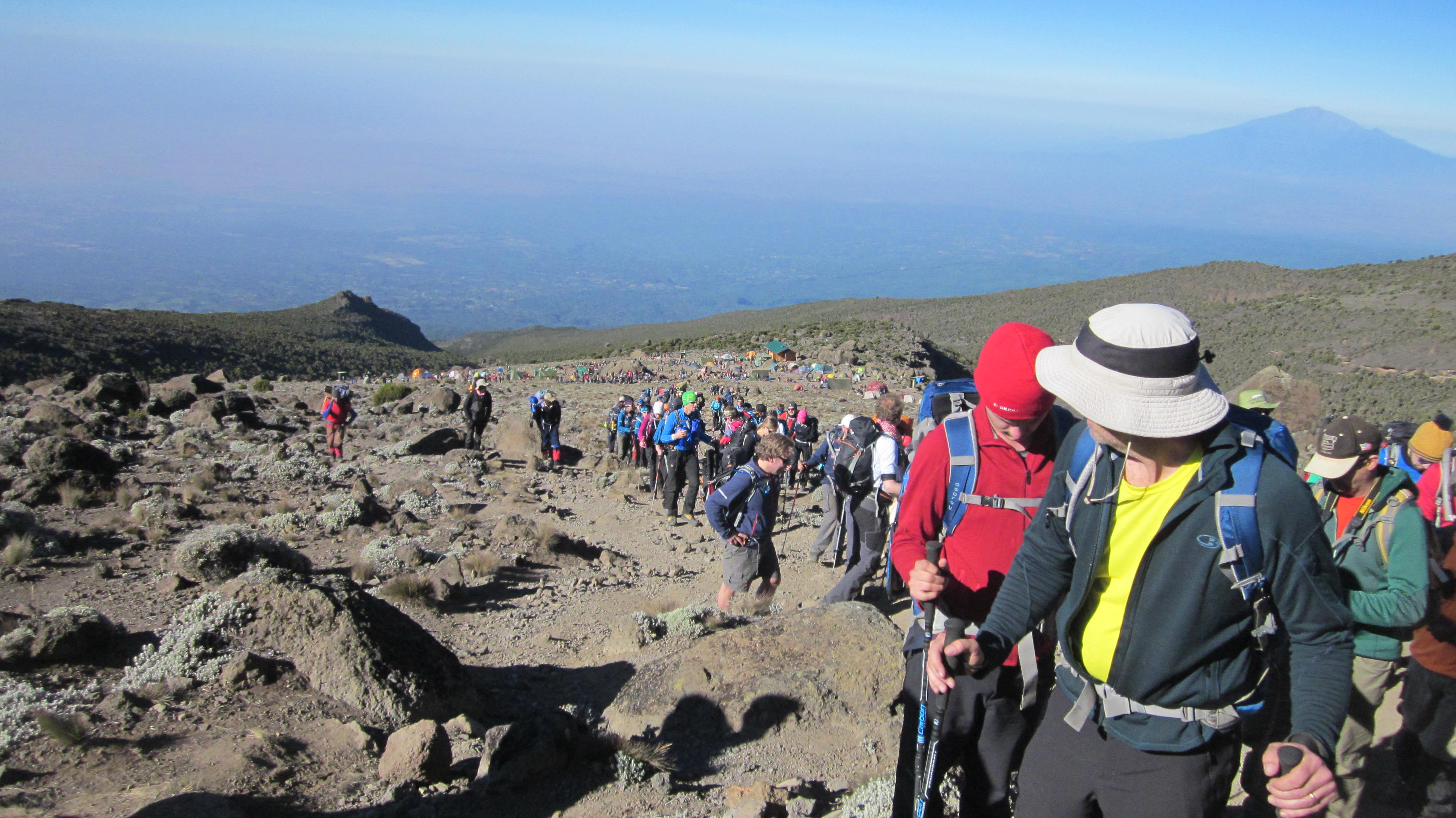
The day before the final ascent was a bit of a strange one. Following on from the previous day, which was probably the longest walking day we had had so far, this one was relatively easy. We set off at about 8.15 a.m. and had a slow start up a long, steepish slope. By this time we were amongst a number of other parties, all going in the same direction. With all of the porters, it was veritable ‘trail of humanity’ across the mountain side. The weather was glorious and we had great views of the Kibo summit and of Mount Meru in the distance. The land was barren, as we were above the altitude that most vegetation – and most sensible humans – were found. But the walk was only a little over three hours before we reached Barafu, the final camp on our way to the summit.

The trail of humanity

The trail of humanity

We lunched at about 1.15pm and then had our ‘summit briefing’. We were told the timetable for the climb and the climbing conditions we would meet. We were told what to wear (lots, as it was going to be cold). And we were told not to give up when it became tough, but at the same time to be aware what our bodies were telling us. If we got severe headaches or other medical conditions we were to tell the guides who would be with us. This was NOT to be a ‘success at all costs’ mission – everyone needed to stay safe. Acute Mountain Sickness can have fatal consequences if ignored.

Darren, Joanne, Florence and Jonathan

Darren, Joanne, Florence and Jonathan

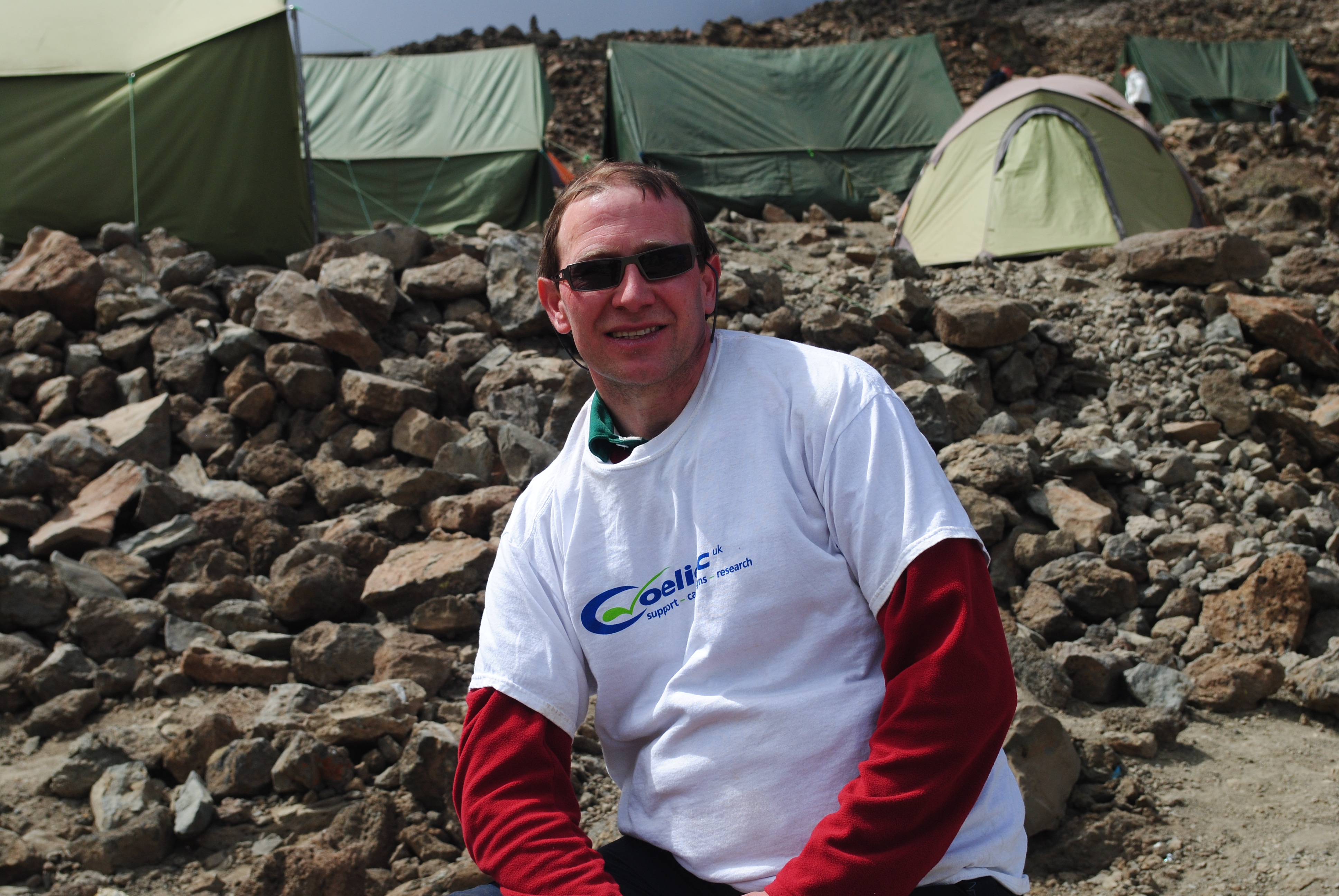
Me, shamelessly advertising Coeliac UK

Me, shamelessly advertising Coeliac UK

In theory, the afternoon and the evening were for resting and ideally for sleeping, as our ascent would start around midnight and take place during the night. However, I did not get much sleep and I would be surprised if many people did. Sleeping in the tent – as you will recall, NOT my favourite part of the trip – was made even harder this time by a combination of high altitude, a noisy campsite and the fact that our tent was pitched on what seemed to be stones, rocks and boulders! Comfortable, not! Also, to be honest, sleeping was made difficult by the excitement of the challenge ahead.

We were up at 11 p.m. for a final meal before setting off. And come 12.05, we were on the move. This was it.

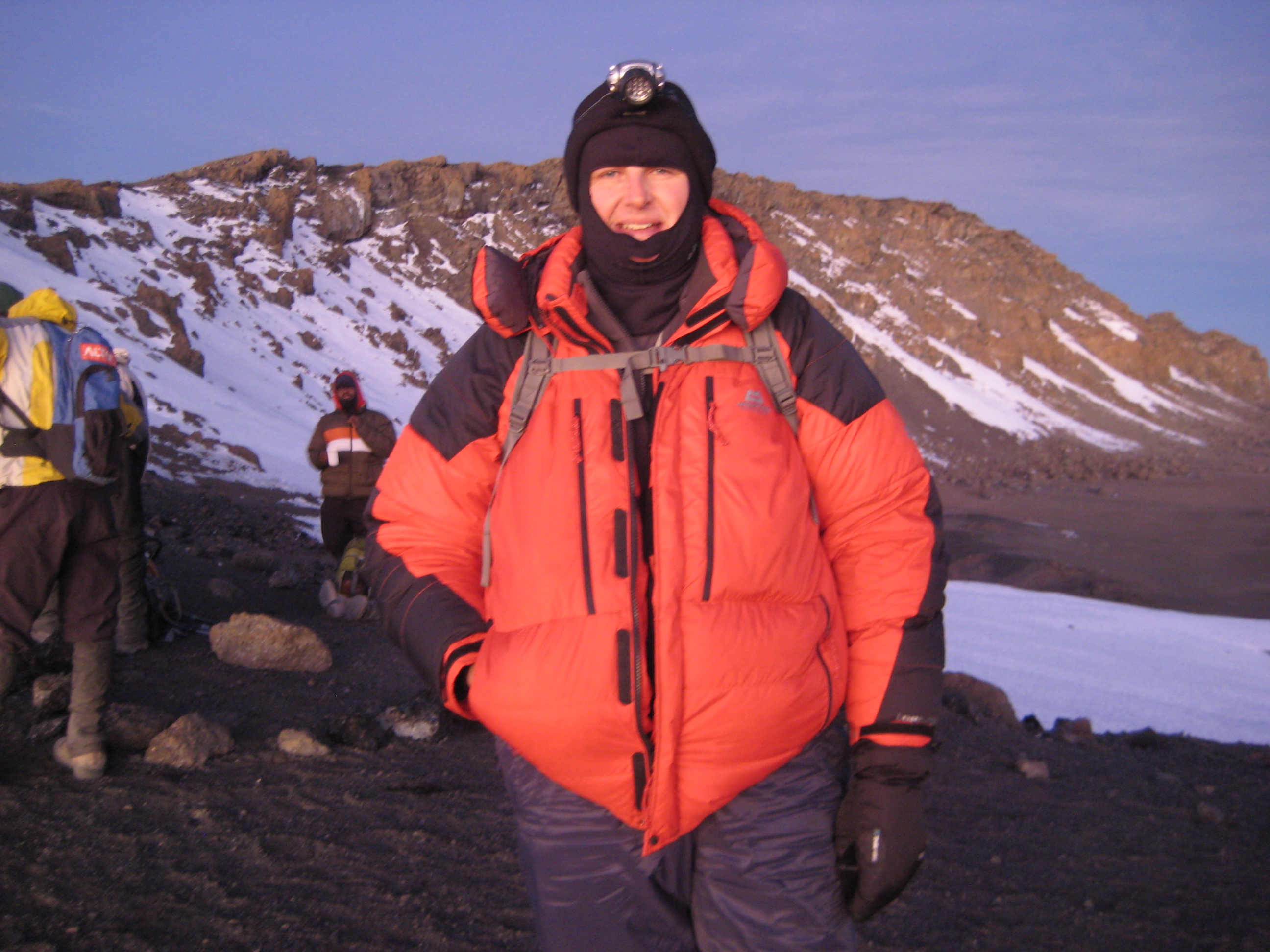
The start of the journey is the part I can remember. It was such a surreal experience. Our party of 15, together with our guides and a number of porters, were not the first to set off. There was already a trail of tiny lights from the head-torches of the walkers in front of us. The lights already stretched what seemed to be a long way up the mountain. But at the same time we were walking alongside another party, perhaps some 20m to our left. We were all walking Polepole (slowly-slowly), but gradually converging as our paths came together to a common point. It was like a bizarre slow-motion race. The two groups merged, with only a small amount of pushing and shoving!

The first part of the journey was actually the one that involved the most scrambling over the bare rock, rather than just walking. Probably a good job, as we were at our best at this point. I hate to think how I would have coped if I had to do this 5 or 6 hours in to the climb.

After that, we had a relatively easy walk for an hour or so. Well, I say easy. The weather was clear and cold, and the wind made it colder. Temperatures were certainly below 00C, which was confirmed when our drinking water started to freeze. Florence and the rest of the guides kept us moving, probably for longer and with fewer and shorter breaks than many of us would have desired. But the simple logic behind this was that when we were moving we were keeping warm; when we were resting, we were getting cold.

Apart from the cold, the other big factor was the effect of altitude.  As I mentioned last time, this has a number of effects. The one that played the biggest part in my climb was the lack of oxygen and the difficulty that this caused in breathing. The higher I climbed, the more I became short of breath, and the harder it was to carry on walking.

After the first couple of hours, the climbing was zig-zagging across the mountain side. Whilst this would have been a stiff walk at sea level, it was an absolutely energy-sapping one at altitudes of over 5,000m. Most of the time I was simply looking down at the boots of the person in front of me and following their foot steps. When I did occasionally look up, I saw the trail of tiny lights above me on the mountainside, always stretching away into the distance.

And this is where it all gets a bit hazy. As well as the physical effort, it became a mental challenge. How to keep going? When your body says please ‘stop for a long rest, or even better, take me down!’

The things that got me to the top:

  • Replaying in my mind the messages of support I had received before setting off
  • The thought that I was raising money for charity
  • The sense of achievement I knew I would get if I did get to the top
  • The desire to tell people that I had made it to the top
  • The camaraderie we had developed within out group over the last few days
  • The help and support of the team of guides and porters.

So, this is where all of the hours and hours of work I had put in over the last six months paid off. The physical work of exercise and the mental work of telling so many people of my crazy plan to climb Kilimanjaro. I was very fortunate in that, apart from the breathing and the tiredness, I was physically okay to carry on. Not all of our party were. So for me, it was the mental challenge.

I had taken with me on the trip to Kilimanjaro various messages of support. Some of these were short messages, such as the ones people had left when donating money to the charity website (http://uk.virginmoneygiving.com/TonyBarradell). Some were longer messages from Christine, my family and some of my friends. One was a picture drawn by my 6 year old nephew, James, showing me on top of the mountain. And all were inspirational in their own way.

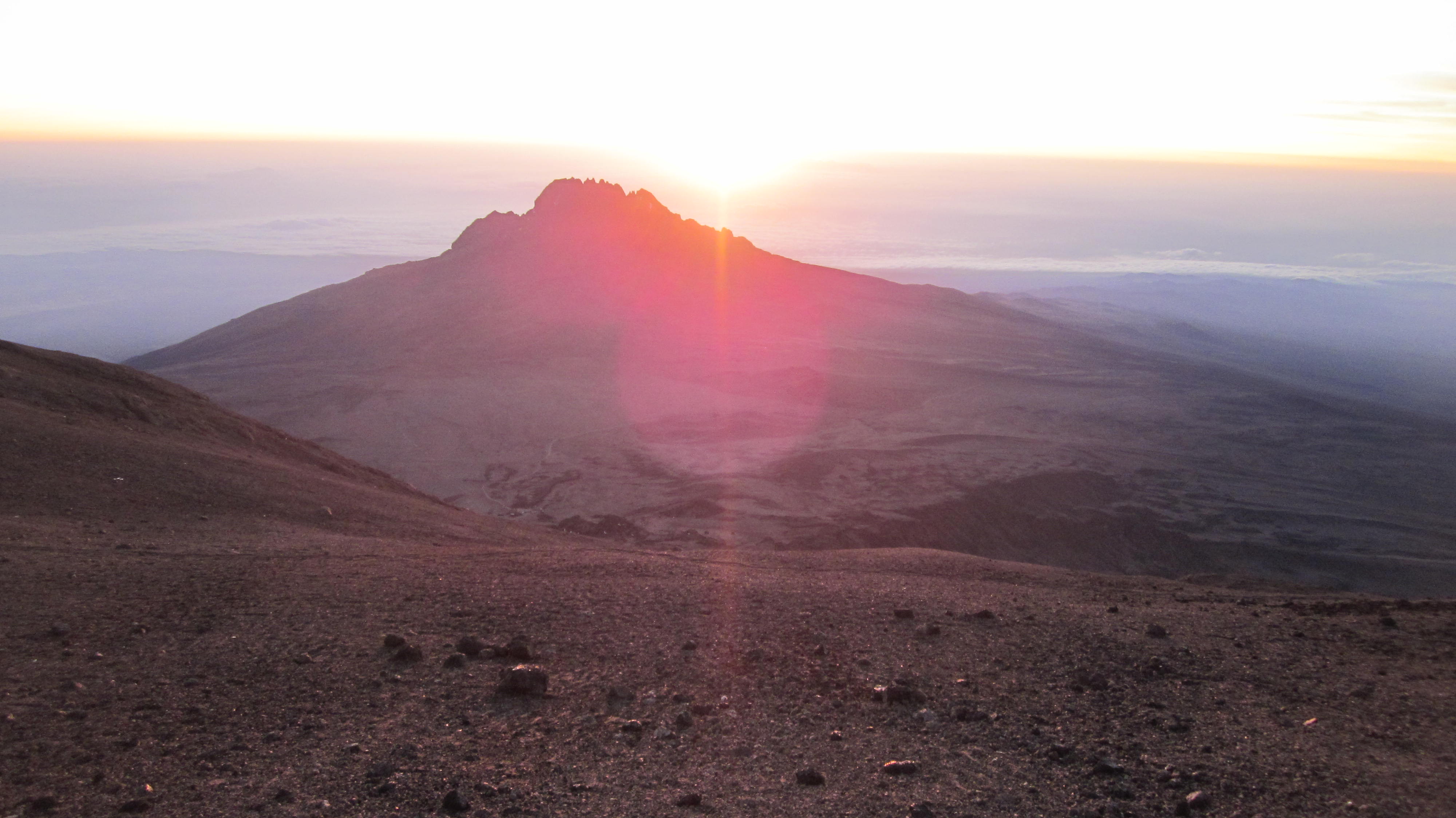
Sunrise over Mawnzi

Sunrise over Mawnzi

After what seemed to be an eternity, the sun started to rise and the darkness turned to gloom, and then half-light and then full sunshine. And so I approached the rim of Kibo, the highest of the two mountain peaks that make up Kilimanjaro. Stella Point was the first target. There I met up with some of my party, and other exhausted but exhilarated climbers. But that was not the end point (at least not for all). After an all-too-brief rest our guides said that if we wanted to get to the top we must set off now. Jonathan and I were at the back of the party who had made it to the top.  We then had a further walk for about another 45 minutes or so to the highest point on the mountain, Uhuru Peak. The walking was not too difficult and we only gained another 150m or so. But we were shattered by this point. The 45 minutes was a LONG 45 minutes, and a number of times we reached a high point, only to find that beyond it, and previously out of sight, the path continued yet further.

Me at Stella Point

Me at Stella Point, shamelessly advertising New College, Leicester

Jonathan at Stella Point

Jonathan at Stella Point

However, at approx. 7.30am on Friday 6th February 2015 Jonathan and I both reached the Uhuru Peak, the highest point on Mount Kilimanjaro. At 5,895m this is the highest point on the African continent, at an oxygen-deprived 5,895m above sea level. It is higher than any point in Europe, Australasia, South East Asia or Antarctica. But we had made it!150206 5 Day 7 TB and JC at Uhuru 1

Getting to the top was hard. Very hard. And it was only through the support of others I made it. And I think I will make that my lesson for this post. Lesson 13 – getting to the top is always that much easier if you have the support of others. So nurture your relationships. And be prepared to help others to achieve their dreams, and they will help you to achieve yours.

Next time – my final reflections on Kilimanjaro – There and Back Again.

Lesson 12 – No Guts, No Glory (but try to hang on to your guts)

I won’t take you on a day by day account of our journey across Kilimanjaro. I’ll save that for the book, or better still the trilogy. Or better still the Star-Wars-style x-ology, whatever x turns out to be! Instead I will tell you something of the highs and the lows as we traversed the mountain, gradually gaining altitude as we moved to the camp below the summit.

The highs. For me, the biggest high was finding myself with such a fabulous bunch of people, and having the time to talk to all of them over the course of the week. I don’t know if Kilimanjaro attracts a certain type of person but I found them all to be a joy to be with (when they weren’t throwing up).

View from Shira Cathedral

View from Shira Cathedral

As well as my chum Jonathan, we had Bjorn and Katrine, who adapted well to the conditions and were usually at the front of the group. Their fellow Norwegians, Morton and Hilde had a harder time, mainly due to the effects of some dodgy food eaten before they arrived at the mountain, but they persevered manfully (and womanfully). Then we had the mother and daughter combo of Annika and Julia. Annika introduced the Daily Award for the person who had done something heroic that day. It was a bottle of rum, which was passed around the group until the final night on the mountain (no guesses as to what happened to it then). Julia was very comfortable on the mountain for most of the time, singing away to the music on her headphones. She practically skipped up the mountain, whilst others (like me) where doing the more mundane things like trying to breathe.

Jo and Darren, our fellow Brits, were on their honeymoon. Now there is a honeymoon to remember! Beats our honeymoon in Scarborough – although our bed was probably more comfortable. Allison and Pete and Pete and Ed were introduced in the last blog, so the final namecheck goes to Dave. He was the only sole traveller in our group. I think we all admired the fact that he could undertake such an arduous trip without at least having someone else to provide support. I was also jealous at times of the fact that he was sleeping alone in a two-man tent, but that is another story.

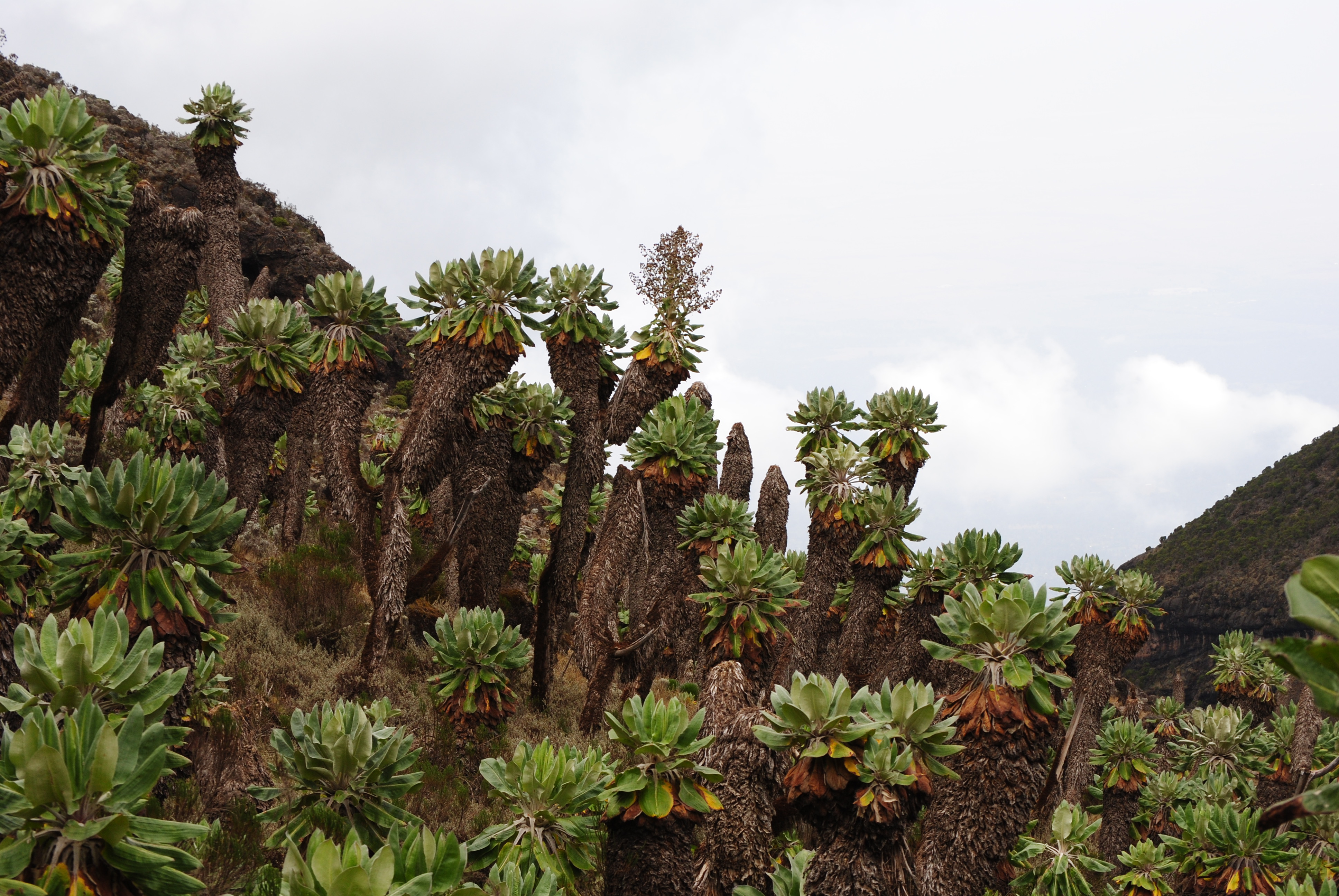
Senecio kilimanjari in the Great Barranco (valley)

Senecio kilimanjari in the Great Barranco (valley)

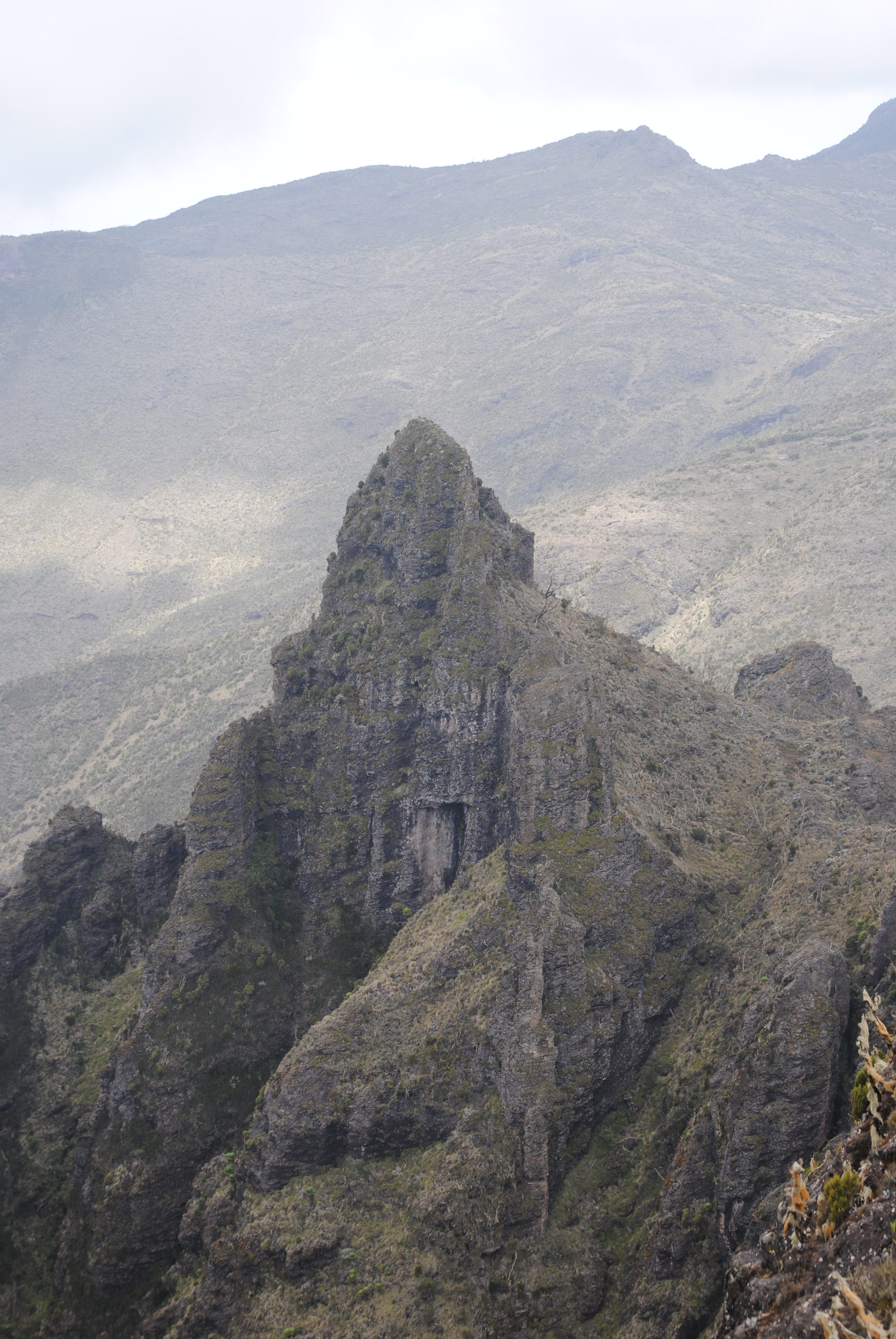
The scenery was another big high for the journey. It varied considerably through the week. We started crossing a scrubby plateau, but soon came to an area of sharp peaks and pinnacles. Much of the mountain was scrub or indeed barren, but the Barranco Valley was a verdant exception, with masses of greenery, including the giant Senecio kilimanjari. The final walk to the bottom of the mountain was through topic forest, complimented by birds and various types of monkeys. And as we had good weather for most of our time on the mountain, we had good views of the two peaks of Kilimanjaro – Kibo and Mawenzi. These were stunning, especially in the moonlight or at dawn.

The walking itself was a highlight for me. I love being outdoors, although the day-job for me is generally an indoors one. And I love being active. No beach holidays for us. Generally it wasn’t hard to walk, although in various places it was tougher as we had to scramble up a steeper rock face. The biggest challenge, apart from the final summit ascent, was one such rock face, known as the Barranco Wall. It may not be mountaineering as mountaineers would see it, but the 200m ascent up a steep mass of rock was close enough to the real thing for me, thank you very much!

Not a bad view I suppose

Not a bad view I suppose

And the final highlight I will pick is just the challenge. The challenge of doing something that was physically hard, and doing it with a group of like-minded people.

So what about the lowlights? I won’t dwell on these, but they have to be mentioned.

The hard part of Kilimanjaro is simply its altitude. The mountain peaks at 5,895m above sea level, and our bodies were simply not designed to operate at this height. At the top, the atmospheric pressure is about 50% of that at sea level. So there is less oxygen. Also the lungs’ ability to extract oxygen deteriorates with altitude, so a double-whammy. And when you are climbing difficult terrain the muscles are working harder, so they need more oxygen – a triple-whammy!

This affects different people in different ways. For myself, the biggest effect through the week was that of headaches. Our guide, Florence, introduced us to the rating scale of 1 – 10, with 1 being a slight headache and 10 being really really bad. He asked us to tell him of headaches, and any other health problems, as his primary job was not to get us to the top of the mountain, but to keep us safe. I had headaches on a number of days, but the worst I got was probably a 4 or 5. This was tackled by paracetamol. Others had more severe headaches, but nothing at the very top of the scale. If they had, and if the headaches persisted then Florence would have ensured that person descended the mountain.

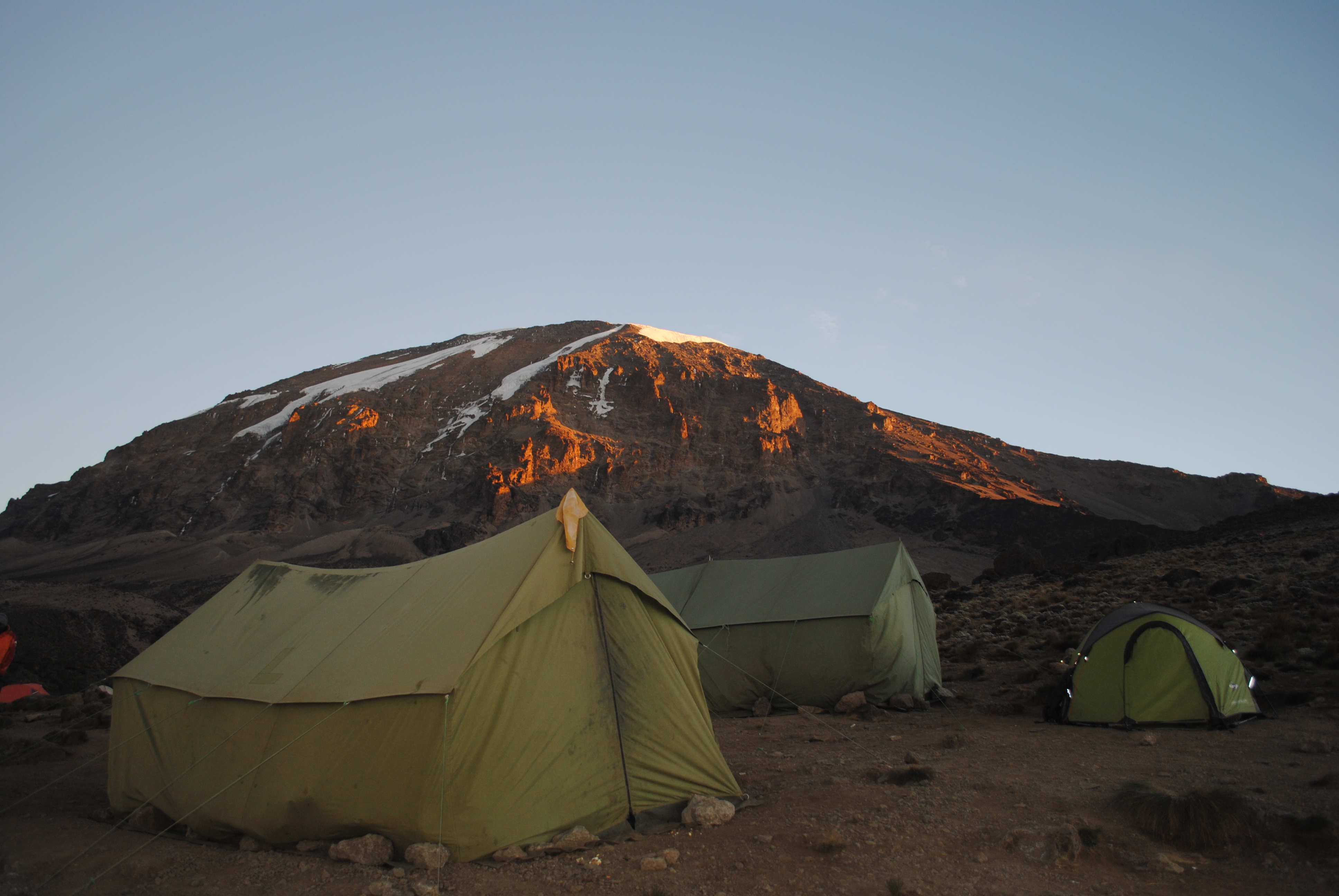
Dawn at Karanga Camp

Dawn at Karanga Camp

Other effects were nausea and loss of appetite. Fortunately I was not affected by these symptoms, although quite a number of our party were, at different times. Florence had various medicines for these ailments too. I was affected by insomnia, which was partly the result of altitude and partly as a result of my ‘love’ of sleeping in a tent! This was not helped by the fact that each night the temperature dipped to freezing or below. This meant we awoke to ice on the outside of the tent, and a general reluctance to wash in the bowl of water that had been deposited next to our tent at about 6.45 each morning.

And breathing was hard work at times (for those of us that weren’t skipping up the mountain whilst singing!)

Throughout the week, these were the main things that affected our group. We supported each other well and we all managed to get through the trials and tribulations to Barafu Camp, the one below the summit.

But we only got there through the hard work of walking across the mountain for a week, and in putting up with the hardships. I wouldn’t have been with such a lovely bunch of people for a week if we had not all come together to accomplish the same goal. I wouldn’t have enjoyed the scenery if I hadn’t been prepared to put up with the deprivations of camping on a mountainside. And I wouldn’t have enjoyed the walking, and the challenges, unless I have been prepared to put up with the mild health effects of altitude.

So the lesson – Lesson No.12 – No Guts, No Glory (but try to hang on to your guts).

4. The Power of a Challenging Goal

So, it is now the Spring of 2014 and Jonathan and I are going to Kilimanjaro. Well, we think we are. I have told a fair few people I am going, and Jonathan has started to tell people as well. But there is a great deal of difference between saying we are going and actually going!snow - ski

Sometimes people say things, and just don’t mean them. For example, Bob and Bono were singing about there being No Snow in Africa this Christmas time in 1985 (and one or two times since!). Now, as they are intelligent folks, I am sure that they know that there is a high likelihood of snow in Africa this Christmas time, and most Christmas times. In Morocco, for example, there are ski resorts. Ethiopia has mountains that receives snowfalls. And it even snows in some places close to the Equator. In Tanzania for example – on top of Mount Kilimanjaro . . .

In fact, students of English Literature may be aware of an Ernest Hemmingway short story, “The Snows of Kilimanjaro”. I’ll have to put that into my rucksack when I go.

However, I think we can forgive Bob and company for taking this artistic licence, as they were raising money for such a good cause.

Back to the point. Some people say things that they mean at the time, but just don’t follow through on them. I come across this all the time with some of the youngsters in my life. “I am going to start dieting and lose 3 stone” is a fairly common refrain. And within a couple of days it becomes “Can I have a packet of crisps please?”

Sometimes this is because the goal set is too big. I have to encourage them to think in smaller terms. Why not have a week without crisps, rather than such a vague or long-term goal as “I am going to diet”? Reward for achievement of these smaller goals (but NOT with a packet of crisps!).

However, sometimes the goals set are too small-scale. Whilst easier to achieve, they can be too easy, and therefore not be seen as such a challenge. Sometimes we need to set Big Hairy Audacious Goals, as the business-writers Jim Collins and Jerry Porras put it in their book Built to Last. These are goals that set the juices flowing. These are the goals that get you up in the morning.

For me, this was the case. For years I had been getting up early two or three times a week to go for a run. Sometimes this was easy, but sometimes (e.g. rain, wind, cold, laziness etc.) were reasons to remain in bed. I run half marathons, and they had been a good reason for me to do the running. However, having the goal of climbing Kilimanjaro was a much more compelling reason to get up. I have now had more runs this year than I ever have, and the average run is a lot longer now that it has been in the past. This would NOT have happened without Kilimanjaro.

So, Lesson No. Four – thinks about goals. Small, short-term goals may be appropriate and useful sometimes. And at other times the power of a challenging goal can really work wonders.