4. The Power of a Challenging Goal

So, it is now the Spring of 2014 and Jonathan and I are going to Kilimanjaro. Well, we think we are. I have told a fair few people I am going, and Jonathan has started to tell people as well. But there is a great deal of difference between saying we are going and actually going!snow - ski
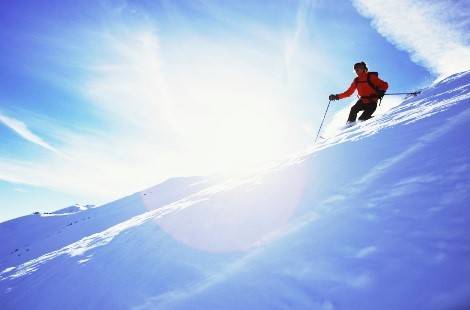
Sometimes people say things, and just don’t mean them. For example, Bob and Bono were singing about there being No Snow in Africa this Christmas time in 1985 (and one or two times since!). Now, as they are intelligent folks, I am sure that they know that there is a high likelihood of snow in Africa this Christmas time, and most Christmas times. In Morocco, for example, there are ski resorts. Ethiopia has mountains that receives snowfalls. And it even snows in some places close to the Equator. In Tanzania for example – on top of Mount Kilimanjaro . . .

In fact, students of English Literature may be aware of an Ernest Hemmingway short story, “The Snows of Kilimanjaro”. I’ll have to put that into my rucksack when I go.

However, I think we can forgive Bob and company for taking this artistic licence, as they were raising money for such a good cause.

Back to the point. Some people say things that they mean at the time, but just don’t follow through on them. I come across this all the time with some of the youngsters in my life. “I am going to start dieting and lose 3 stone” is a fairly common refrain. And within a couple of days it becomes “Can I have a packet of crisps please?”

Sometimes this is because the goal set is too big. I have to encourage them to think in smaller terms. Why not have a week without crisps, rather than such a vague or long-term goal as “I am going to diet”? Reward for achievement of these smaller goals (but NOT with a packet of crisps!).

However, sometimes the goals set are too small-scale. Whilst easier to achieve, they can be too easy, and therefore not be seen as such a challenge. Sometimes we need to set Big Hairy Audacious Goals, as the business-writers Jim Collins and Jerry Porras put it in their book Built to Last. These are goals that set the juices flowing. These are the goals that get you up in the morning.

For me, this was the case. For years I had been getting up early two or three times a week to go for a run. Sometimes this was easy, but sometimes (e.g. rain, wind, cold, laziness etc.) were reasons to remain in bed. I run half marathons, and they had been a good reason for me to do the running. However, having the goal of climbing Kilimanjaro was a much more compelling reason to get up. I have now had more runs this year than I ever have, and the average run is a lot longer now that it has been in the past. This would NOT have happened without Kilimanjaro.

So, Lesson No. Four – thinks about goals. Small, short-term goals may be appropriate and useful sometimes. And at other times the power of a challenging goal can really work wonders.

3. Gaining momentum – gathering a team

1 Prop 1 - Old Kent Road

human pyramidThe goal – to reach the summit of Kilimanjaro. The deadline – January 2015. The means – go with a party of likeminded people, probably all raising money for a charity. The motivation – achievement. And not wanting to wimp out now that I had told people I was going to do it!

So much was known about the trip. However, I wanted to make it easier on myself by having someone to join me on the journey. Someone to share in the fun. Or probably more importantly, someone to spur me on when the going gets tough.

For all sorts of excellent reasons, my wife Christine did not want to come with me. So, who would be mad enough to join me on this exploit?

I asked a number of people, and like Christine they had excellent reasons to thank me for the offer and to politely turn me down. No worries. If no-one came with me, I would still be going.

And then a chance meeting with an old school pal. I see Jonathan a few times a year, and we do ‘have form’. Back in the early Eighties we had a couple of walking holidays together. We have tackled the treacherous paths of The Lake District (i.e. the safe bits by the lakes rather than the high bits near the mountains), and the wilderness that IS Dartmoor. Oh yes – Youth Hostelling didn’t get tougher than this! Well it didn’t for us, anyway. After that, we went our own separate ways, but stayed in touch over the years with the occasional meeting. In fact, my last adventure with Jonathan was in the summer of 2012, when we set ourselves the challenge of going around London in 24 hours, collecting photographs of all of the places represented on the Monopoly board. That was a fun rush around London, but the Kilimanjaro challenge would be in an all-together different league.

I mentioned to Jonathan that I was going to Kilimanjaro and was looking for company. Encouraging, his first reaction was not “well good luck on that one”. Not an instant jump for joy from him, but not a decline either. He said that he would think about it. And think he did. (Jonathan is good at thinking). But after a short time he called me to say that he would take up the challenge.

And didn’t that make me feel a whole lot better! I had someone to go with. Someone to plan with. Someone to hold me to account if I thought of backing out.

And I also had a following. Jonathan took on much of the planning for the trip. And some of the folks who could not come with me wanted to help in other ways. My friend Teresa would end up putting in hours of work, making jams and potting plants to sell to raise money for charities related to the trip. Others offered help in other ways, such as offers of food and equipment. More of them offered advice, or put me in touch with others who had made the trip.

So, rather than becoming a solo effort, I had a team to back me up. And that is my Lesson No. Three. The task is so much easier if you can Get a Team. When I do make it to the top of Kilimanjaro I will have a LOT of people to thank!

Join me next week to find out why there WILL be snow in Africa this Christmas time, despite what Bob and co may say!

2. Back on track. Public Commitment

Early January 2014. The usual assortment of mail. Much of it asking for money from me. Most of it ending in the bin after a brief glance. But for some reason, my attention was caught by one of the charity letters I received. Amongst the requests for money there was a request for people to join in on some of the charity’s activities. A marathon. A long-distance bike ride. A climb of Kilimanjaro . . .

Kilimanjaro. Africa’s highest mountain. The biggest free standing mountain in the world. Majestic in the coastal plains of Northern Tanzania.

And that was it. Back came the memories of that talk long ago, given by a conqueror of Everest. Back came the thoughts of me going on an adventure. Back came Harrison Ford/Indiana Jones, cracking his bull whip and shooting the big swordsman with the very sharp-looking scimitar. Here was a chance to do all of those things and be all of those things (well, without the whip and the gun). And here was the chance to raise a not-insignificant sum of money for a very worthwhile charity. I was smitten.

First hurdle was to get the trip signed off by Christine, without whose support the trip would never have been possible. And what is so wonderful about her support is that it is something that she really does not want me to do. But she appreciates that it is something I really want to do, and in this she supports me. What a star she is!

The second action was to make good my earlier mistake of keeping this dream private. And I had the chance soon after. I was delivering a training programme to a group of managers and one of the topics was on coaching methods. One suggested practice in coaching is to get the person being coached to commit to action. And the more public the declaration, the more likely they are to follow through. So, in January 2014 I declared to a group of some 15 managers that in a year’s time I would be climbing Kilimanjaro. And that was it. It was out there. Chances were I would be seeing some of these people again on future training events. And chances were that at least some of them would remember and ask me how it was going, or if I had done it. So from that point, there was no turning back.

So, Lesson No. Two from my Kilimanjaro journey. Make it public. It you are going to do something, tell people that you are going to do it. That way you immediately set up a group of people who will hold you to account. Make a public commitment – and you are more likely to make it happen.

Look out for my next post when I gain momentum by gaining further support.

No 1. Inspiration and Action (lack of)

In January/February 2015 I will be climbing Mount Kilimanjaro, Africa’s highest mountain. Over the period leading up to the climb I will be posting details of how I made the transition from middle-aged, unadventurous pen-pusher to someone who overcame the physical and mental challenges to achieve something worthwhile, both for myself and for a small number of charities. As I start these posts I have not achieved. I hope by writing this I will push myself to achieve, and will share with you the insights I have had along the way. I hope you can enjoy the journey, and the lessons, as well.

  1. Inspiration and Action (lack of)

Everest. My first contact with a climber was when I attended a professional institute event in Leicester and heard Ian Woodall speak of his experiences of climbing Everest. Ian started with a comment something along the lines of “It was a cold and bleak night in Kathmandu”. The very mention of that mountainous city brought half-remembered scenes (probably from an Indiana Jones’ film) back to life. Ian told of his various trials and tribulations on his climbs of Everest. He told of his successes and of the tragedies he encountered. I was captivated.

That was a long time ago. As a non-climber, I remained a non-climber! Life took me in different directions and continues to throw up fresh challenges. But my interest in mountain climbing remained, deeply hidden. A dream never actioned. A challenge never tackled. Until I went to another professional meeting a couple of years ago . . .

At that meeting, I became aware of Mount Kilimanjaro. Okay, so it is not as high as Everest, coming in at a ‘mere’ 19,336 feet (5895m) compared to the unparalleled heights of Everest (29,029 feet, 8,848 m), but a tad higher than Britain’s biggest peak, Ben Nevis, (4,409 feet, 1,344m). However, it does have the great advantage of being a mountain which can be climbed without climbing! By that, I mean that it is possible to trek to the top (with qualified guides) without the need for mountaineering skills. And it was a mountain potentially within reach of my capabilities . . .

The big mistake.

Having set in my mind the idea of climbing Kilimanjaro, I then proceeded to do the thing that most people do about most of the big ideas that come into their head. Nothing. I think I mentioned it to my wife Christine, and probably got a supportive but doubting ‘well if that’s what you want to do’. But beyond that, I told very few people. And that was my undoing. Because I had told practically no one it was easy to do, well, nothing. Who was going to ask me how I was getting on with my preparation? Who was going to hold me to my promise? In whose eyes was I going to look bad if I did not following through? No one.

Thinking back, I am reminded of a booked called ‘Dreams: Your Life, Your Future’ by John Peter Wilson. In this book John sets out his thoughts on why dreaming is so important to our wellbeing and our existence, and what you can do to both encourage dreaming and to make the most of it. He cautions that dreams alone will not do the job. Dreams have to lead to action for them to have any fruitful outcomes. In the words of Frank-N-Furter, “Don’t Dream it: Be It”.

So, Lesson No. One from my Kilimanjaro journey. Take Action. Without actions, dreams remain just that: dreams.  As soon as you can, you need to be taking action on your dreams. Tell people about them: Buy the ticket; Sign the papers. Whatever it takes to get you on the road to turning dreams into reality.

Look out for the second post and I’ll tell you about the rekindling of the dream and the power of telling people.